

Ok. So I decided to get off my comfortable chair, and during a bit of rehabilitation (Broken arms are a bitch, I just thank every single deity in the universe I still can draw, and that the broken part of the elbow doesn't affect that) and re-start an old project. It's a webcomic, and it will start running this Monday (July 23). Hope you enjoy it (And that this time, I don't lose my blog password -again-)
Saturday, July 21, 2007
New Webcomic.
Sunday, April 29, 2007
More on Friends of Lulu Awards Nominations. Now, open to all.
Lulu Award Nominations and Voting Extended to Non-Members!
In an effort to reach out to and recognize an even greater sphere of women creators, Friends of Lulu has decided for the first time ever to open the nominations and voting of our Lulu Awards to non-members! In order to accommodate our new voters, the deadline for nominations has been extended through May 7th, 2007!
In case you’re new to Friends of Lulu, our annual Lulu Awards bring honor and recognition to the most inspiring and noteworthy women in the comic book industry, as well as the efforts, achievements, and works that reflect Friends of Lulu’s goals. It’s up to you, Lulu members, to make the nominations and to vote for this year’s shining stars!
Nominations for the Awards are made by and voted on by current members of Friends of Lulu. The Lulu Awards are handed out during our evening awards ceremony at Comic-Con International in San Diego each year. (It’s always a blast!)
Start thinking about who you want to nominate for this year’s awards.The Women Cartoonists Hall of Fame nominees must have published work, whether self-published, company-published, or web-published. An individual cannot win more than once.
Past winners include: Roberta Gregory, Naughty Bits, Artistic Licentiousness - 2006; Rumiko Takahashi - 2005; Lynda Barry - 2004; Wendy Pini - 2003; Lynn Johnston - 2002; Trina Robbins, Hilda Terry (tie) – 2001; Marge Henderson Buell - 2000; Ramona Fradon - 1999; Dale Messick - 1998; Marie Severin - 1997.
The Women of Distinction award is designed to recognize those women who have made considerable contributions to the comics industry in non-creator roles like publishing, editing, reporting or retailing.
Past winners include: Diana Schutz, Editor, Dark Horse - 2006; Heidi MacDonald - 2005; Maggie Thompson - 2004
The Lulu of the Year Award honors the creator(s), book or other project whose work best exemplifies Friends of Lulu’s mission.
Past winners include: SCHOLASTIC/GRAPHIX, Publisher: Babysitters Club, Queen Bee, Breaking Up - 2006; Shaenon Garrity, Girlamatic.com, Modern Tales; Flight Anthology (tie) - 2005; www.Girlamatic. com, Lea Hernandez, Editor - 2004; Free Comic Book Day, Joe Field, Organizer - 2003; Sequential Tart, Marcia Allass, Editor - 2002; Go Girl!, Trina Robbins and Anne Timmons - 2001; From Girls to Grrlz: A History of Women’s Comics from Teens to Zines, Trina Robbins - 2000; Scary Godmother, Jill Thompson - 1999; Action Girl, Sarah Dyer, Editor - 1998; The Great Women Superheroes, Trina Robbins - 1997.
The Kim Yale Award nominees must have published work, whether self-published, company-published, or web-published. Nominees must be nominated for this category within three years of their first published work. An individual may not be nominated more than twice, and cannot win more than once. The award is named for comics writer Kim Yale, a founding Lulu member who passed away in 1997.
Past winners include: Leigh Dragoon, By the Wayside - 2006; Vera Brosgol (Flight, Hopeless Savages B-Sides) - 2005; Lark Pien (Long Tail Kitty) - 2004, Raina Telgemeier (Take-Out Comics) - 2003; Ashley-Jane Nicholaus (Haven) & Gisèle Legacé (Cool Cat Studio) (tie) - 2002; Anne Timmons (GoGirl!) - 2001; Rachel Hartman (Amy Unbounded) - 2000; Devin Grayson (writer, Catwoman, Black Widow) - 1999; Carla Speed McNeil (Finder) - 1998; Jessica Abel (Artbabe) - 1997.
So here’s the deal. We need you to nominate the people you think should receive the awards this year. Review the nominee requirements, think about who stands out in your mind for each award.
Then go to our online nomination form (http://www. friends-lulu. org/awards06nomf orm.php) to submit your nominations.
If you don’t have internet access you can send in your nominations via snail mail to:
Lulu Award Nomination 2007
83 Russell St
Suite 3R
Brooklyn, NY 11222
83 Russell St
Suite 3R
Brooklyn, NY 11222
Nominations are due MAY 7, 2007.
Nominate whomever you wish, up to THREE per category, as long as they fit the requirements. If you are able, please include additional information (i.e. publisher, date of publication) about each individual, so we can verify the nomination quicker and easier.
We couldn’t do it without you, so if you are interested in sponsoring the Lulu Awards, please contact the board (board [AT] friends-lulu [DOT] org) for more info.
Sunday, March 25, 2007
Calling for Nominees for the Lulu Awards.
I suck at formal introductions, so I'll go straight and to the point with the official announcement:
Nominations Now Being Accepted for the 2007 Lulu Awards!
It’s that time of year again—time to nominate the brightest and best for the 2007 Lulu Awards! Our annual Lulu Awards bring honor and recognition to the most inspiring and noteworthy women in the comic book industry, as well as the efforts, achievements, and works that reflect Friends of Lulu’s goals. It’s up to you, Lulu members, to make the nominations and to vote for this year’s shining stars!
Nominations for the Awards are made by and voted on by current members of Friends of Lulu. The Lulu Awards are handed out during our evening awards ceremony at Comic-Con International in San Diego each year. (It’s always a blast!)
Start thinking about who you want to nominate for this year’s awards.The Women Cartoonists Hall of Fame nominees must have published work, whether self-published, company-published, or web-published. An individual cannot win more than once.
Past winners include: Roberta Gregory, Naughty Bits, Artistic Licentiousness - 2006; Rumiko Takahashi - 2005; Lynda Barry - 2004; Wendy Pini - 2003; Lynn Johnston - 2002; Trina Robbins, Hilda Terry (tie) – 2001; Marge Henderson Buell - 2000; Ramona Fradon - 1999; Dale Messick - 1998; Marie Severin - 1997.
The Women of Distinction award is designed to recognize those women who have made considerable contributions to the comics industry in non-creator roles like publishing, editing, reporting or retailing.
Past winners include: Diana Schutz, Editor, Dark Horse - 2006; Heidi McDonald - 2005; Maggie Thompson - 2004
The Lulu of the Year Award honors the creator(s), book or other project whose work best exemplifies Friends of Lulu’s mission.
Past winners include: SCHOLASTIC/GRAPHIX, Publisher: Babysitters Club, Queen Bee, Breaking Up - 2006; Shaenon Garrity, Girlamatic.com, Modern Tales; Flight Anthology (tie) - 2005; www.Girlamatic. com, Lea Hernandez, Editor - 2004; Free Comic Book Day, Joe Field, Organizer - 2003; Sequential Tart, Marcia Allass, Editor - 2002; Go Girl!, Trina Robbins and Anne Timmons - 2001; From Girls to Grrlz: A History of Women’s Comics from Teens to Zines, Trina Robbins - 2000; Scary Godmother, Jill Thompson - 1999; Action Girl, Sarah Dyer, Editor - 1998; The Great Women Superheroes, Trina Robbins - 1997.
The Kim Yale Award nominees must have published work, whether self-published, company-published, or web-published. Nominees must be nominated for this category within three years of their first published work. An individual may not be nominated more than twice, and cannot win more than once. The award is named for comics writer Kim Yale, a founding Lulu member who passed away in 1997.
Past winners include: Leigh Dragoon, By the Wayside - 2006; Vera Brosgol (Flight, Hopeless Savages B-Sides) - 2005; Lark Pien (Long Tail Kitty) - 2004, Raina Telgemeier (Take-Out Comics) - 2003; Ashley-Jane Nicholaus (Haven) & Gisèle Legacé (Cool Cat Studio) (tie) - 2002; Anne Timmons (GoGirl!) - 2001; Rachel Hartman (Amy Unbounded) - 2000; Devin Grayson (writer, Catwoman, Black Widow) - 1999; Carla Speed McNeil (Finder) - 1998; Jessica Abel (Artbabe) - 1997.
So here’s the deal. We need you to nominate the people you think should receive the awards this year. Review the nominee requirements, think about who stands out in your mind for each award.
Then go to our online nomination form (http://www.friends- lulu.org/ awards06nomform. php) to submit your nominations.
If you don’t have internet access you can send in your nominations via snail mail to:
Lulu Award Nomination 2007
83 Russell St
Suite 3R
Brooklyn, NY 11222
83 Russell St
Suite 3R
Brooklyn, NY 11222
Nominations are due MAY 1, 2007.
Nominate whomever you wish, up to THREE per category, as long as they fit the requirements. If you are able, please include additional information (i.e. publisher, date of publication) about each individual, so we can verify the nomination quicker and easier.
You must be a member in good standing (dues paid up to date) in order to nominate. If you are unsure whether you are up to date, please contact Shawnee Gibbs (Shawnee at Friends- Lulu dot org), our membership secretary, prior to sending in your nominations. We couldn’t do it without you, so if you are interested in sponsoring the Lulu Awards, please contact the board of directors (Board at Friends- Lulu dot org) for more info.
Sunday, February 04, 2007
Equality in death
One of the main ‘defenses’ I’ve read about the treatment of women in comics is that ‘bad things happen to males too’. And that is true. It’s hard to explain why the death of a woman, such as Phantom Lady, can be considered a bit misogynistic, and on the other hand, the death of Superboy is not a show of hate against males.
Thinking about how to make the argument on how it’s not that female characters die, but how they die, I remembered one of my guilty pleasures, Battle Royale.
Now, Battle Royale is a gore fest. Out of 42 sort of main characters, 40 die. And they don’t die in their sleep, no. We get to see their faces blown off, ripped open, riddled with bullets, stomachs torn in two, and so on. Of the three incarnations of Battle Royale, the manga is the bloodiest. My partner in the Oubilette, Aurea D’Nabe, correctly classified it as a ‘morbid’ manga. It’s designed to shock the viewer, and it doesn’t pull any stops to do so. If it has to be violence, its with violence, and if it has to be with sex, its with sex.
All of the volumes in English were sold wrapped up because of the violence, but there are certain chapters, particularly in volume 8, that get really close to a hentai comic. Girls get naked and show their panties a lot here.
But ignoring that little fact –that right there would be a mark about how Battle Royale is indeed sexist, because the girls get naked for no apparent reason than to get naked- it is a very good example of how one death is not the same as the other. After all, the 42 kids are neatly divided, 21 girls, 21 boys, and the survivors are one girl and one boy.
The exact same number of female characters and male characters die on it, so we can see how their deaths are different, and if that matters.
Needless to say, there will be a lot of spoilers.
1.- Yoshitoki Kuninobu, boy 5. Two shots in the head. We get to see his tongue ripped open with the first shot, his eyeballs go out of his skull with the second. Dies defending Noriko. Killed by the Program Director. He didn’t kill anyone.
2.- Fumiyo Fujiyoshi, girl 18. Knife in the middle of the forehead. No gore at all except for the pool of blood under her head. Dies for trying to ask a friend the rules of the Program. Killed by the Program Director. She didn’t kill anyone.
3.- Mayumi Tendo, girl 14. Arrow on the side of her head. No gore except that we see the arrow sticking out. Killed by Yoshio Akamatsu when leaving the school. She didn’t kill anyone.
4.-Yoshio Akamatsu, boy 1. Arrow on the side of his head, we see his eyeball pop out. Killed by Kazushi Niida. Killed 1 girl.
5.- Megumi Etou, girl 3. Throat cut open with a sickle, we get to see the whole process. Killed by Mitsuko Souma. She didn’t kill anyone.
6.- Hiroshi Kuronaga, boy 9. Killed by bullets, we only get to see the body. Killed by Kazuo Kiriyama. He didn’t kill anyone.
7.- Ryohei Sasagawa, boy 10. Killled by bullets, we only get to see the body. Killed by Kazuo Kiriyama. He didn’t kill anyone.
8.- Izumi Kanai, girl 5. Killed by bullets, we only get to see the body. Killed by Kazuo Kiriyama. She didn’t kill anyone. The translation hints that she was going to be raped by Hiroshi and Ryohei, but readers of the original say that was added by the adaptation.
9.- Mitsuru Numai, boy 17. Killed by bullets, we see the process for five pages. Killed by Kazuo Kiriyama. He didn’t kill anyone.
10.- Sakura Ogawai, girl 4, and Kazuhiko Yamamoto, boy #21. Suicide by jumping off a cliff. No gore. They didn’t kill anyone. She decided when to jump.
11.- Tatsumichi Oochi, boy 3. Head split in two with a machete during a fight with Shuya Nanahara. Quite gorish, but not extreme. He didn’t kill anyone.
12.- Kyoichi Motbushi, boy 20. Arm blown off by shotgun, then a shot to the stomach. We see the blood, the bone and the intestine going out (later in a nightmare scene, we see a second hole in his chest). Killed by Shogo Kawada. He didn’t kill anyone.
13.- Yukiko Kitano, girl 6 and Yumiko Kusaka, girl 7. Shot to death, from the back, then shot in the head while trying to call the other students to stop killing each other. Their agony lasts 9 pages. Killed by Kazuo Kiriyama. They didn’t kill anyone.
14.- Yoji Kuramoto, boy 8. Got his head shot off while on top of his girlfriend. Brains and all are seen on panel. His girlfriend tries to put the brain back into his head. Killed by Mitsuko Souma. He didn’t kill anyone although he held his girlfriend at gun point.
15.-Yoshimi Yahagi, girl 21. Head blown off, shot through the eye, after we get to see her past as teenage prostitute. Killed by Mitsuko Souma, she didn’t kill anyone.
16.- Kazushi Niida, boy 16. Beaten, eye out of his socket, arrow pushed through the back of his head all the way to his tongue, completely graphic. Killed By Takako Chigusa. He killed one boy, tried to rape one girl.
17.- Takako Chigusa, girl 13. Shot in the back, after she killed Kazushi when he tried to rape her graphically. Killed by Mitsuko Souma. Killed one boy.
18. Kaori Minami, girl 20. Shot trough the side of her head after she went insane due to her acne. Killed by Shogo Kawada. She didn’t kill anyone, but one girl died in part thanks to her actions.
19. Sho Tsukioka, boy 14. Head blown off, cleanly in two, by collar explosion. Killed (indirectly) by Kazuo Kiriyama. He didn’t kill anyone. It’s made a huge deal that he’s gay.
20. Hirono Shimizu, girl 10. Thrown in well, drowned. Also, had a terrible infection at the moment. Died trying to climb back out. Killed by Toshinori Oda. She didn’t kill anyone.
21.- Keita Ijima, boy 2. Shot in the head, graphically. Killed by Shinji Mimura. He didn’t kill anyone.
22.-Yutaka Seto, boy 12. Shot in the head, repeatedly and graphically. Killed by Kazuo Kiriyama. He didn’t kill anyone.
23.- Shinji Mimura, boy 19 . Shot in the stomach, in the head, back all over, and suffered an explosion, and shot in the head once more while trying to kill Kiriyama and destroy the program with a bomb. Killed by Kazuo Kiriyama. He killed one boy.
24.- Tadakatsu Hatagami, boy 18. Head cut in two with sickle. Killed by Mitsuko Souma. Almost killed one boy.
25.- Yuichiro Takiguchi, boy 13. Shot in the stomach by Tadakatsu, then raped by Mitsuko, and had a sickle run through his head. Killed by Mitsuko Souma. He didn’t kill anyone.
26.- Toshinori Oda, boy 4. Shot through the groin by Kiriyama. Quite gory. Killed by Kiriyama. He killed one girl.
27.- Yuka Nakagawa, girl 14. Accidentally poisoned by Yuko. Killed by Yuko Sakaki. She didn’t kill anyone.
28.- Chisato Matsui, girl 19. Shot to death through the stomach. Killed by Satomi Noda. She didn’t kill anyone.
29.- Yukio Utsumi, girl 2. Shot to death through the chest. Killed by Satomi Noda. She didn’t kill anyone.
30.- Haruka Tanizawa, girl 12. Shot to death through the side. Killed by Satomi Noda. She managed to kill Satomi with her last breath.
31.- Satomi Noda, girl 17. Shot to death through the head. Killed by Haruka Tanizawa. She killed 3 girls.
32.- Yuko Sakaki, girl 9. Jumped to her death. Caused the deaths of 5 girls, and her own.
33.- Mizuho Inada, girl 1. Shot in the head by Kiriyama while in her underwear. Killed by Kazuo Kiriyama, didn’t kill anyone.
34. Kaoyoko Kotohiki, girl 8. Lets herself be shot by Kiriyama after he almost kills Hiroki Sugimura. Killed by Kazuo Kiriyama, didn’t kill anyone.
35.- Hiroki Sugimura, boy 11. Shot by Kiriyama, after Kiriyama and him fought and Hiroki was almost beat to death. Killed by Kazuo Kiriyama, didn’t kill anyone
36.- Mitsuko Souma, girl 11. Shot in the head by Kiriyama, after she got naked to try and seduce him. She also was raped as a child, something that is shown many times in the manga, AND tended to get naked and touch herself. Killed by Kazuo Kiriyama, killed 3 girls and 3 boys.
37.- Kazuo Kiriyama, boy 6. Shot in the head by Shuuya Nanahara, after a 2 volume fight. Killed by Shuuya Nanahara (With a lot of help from Shogo Kawada, and using Noriko as a human shield). Killed 6 girls and 8 boys (Or maybe 9. See below)
38.- Shogo Kawada, boy 5. Shot in the stomach. No idea by whom, but probably Kiriyama. Saved Shuuya and Noriko. Killed 1 boy, 1 girl.
Survivors: Shuuya Nanahara, boy 7, and Noriko Nakagawa, girl 15. Is worth of mention that Noriko didn’t kill anyone and was dragged along the way for the 15 volumes.
Now, the problem here is that for a story that shows that everyone can do the unthinkable when pushed far enough, girls are still considered weaker and passive. In the original novel, at least, Noriko is the one who pulls the trigger on Kiriyama, showing that she was along not only as the symbol of all that was pure and nice and to be the main characters’ future girlfriend, but in the manga she’s the perfect damsel in distress. She gets shot, she gets sick, she gets to cry a lot, and that’s all she does. And the only reason why I can stomach her, is because Shuuya is pretty much the same, even when he does get action scenes.
What really bothered me now that I did this list –and that I honestly didn’t notice on first reading, when I was doing the reading one volume at the time- was that girls do nothing. There’s one girl who really fights against his would be male killer, Chigusa, and that’s because her would be killer is also her would be rapist. If he hadn’t threaten her with that, she would’ve let him go. Most of the girls don’t kill anyone, and the three with the high body count are a girl who kills her friends in a hysterical panic attack (All victims are girls), a girl who poisoned accidentally one of her friends and caused the mentioned panic attack, and Mitsuko Souma. She’s touted by the fans as one of the two ‘cool’ characters, being the evil girl as opposed to the evil boy Kiriyama, but not only she has a much lower body count, when one does examine the deaths, one can think that Mitsuko managed to kill them almost by accident. Not to mention that, to explain why a girl could become such a dangerous killer, we have to know, repeatedly, that she was raped as a child, by her step father, became a prostitute as young as 13, AND her real father abandoned them. She dies, naked, begging to her ‘daddy’ to fulfill the promise that ‘it would never hurt’.
(As a contrast, Kiriyama is such a dangerous killer because he can’t feel. He has brain damage, and doesn’t feel any empathy towards anyone. He’s a sociopath, who nevertheless was loved by his father. However, apparently in the final shooting, Shuuya manages to hit the nerve connections back in place as his final words are ‘I can feel again’. Somehow, I can’t help but feel that Kiriyama was given a lot more thought as a villain than Mitsuko)
And that’s the difference, see? It’s not that horrible things don’t happen to male characters when they happen to female characters. It’s that horrible things happen to male characters when they try to prevent them from happening, while horrible things happen to female characters when they’re just sort of standing there. All of the ‘good’ guys were forming teams and planning to try and destroy the program; all of the ‘good’ girls were… hiding. The ones who formed a team was a team to see if they could last until the third day, and then… well, either wait for someone else to have a plan or die together. As friends. And they managed to kill each other in a panic attack brought by hysteria. Guys roam through the island trying to find their loved ones and defend them to death, girls… cry a lot when found and stay around doing nothing when there’s a psychotic killer with a shotgun on the lose even if they have a gun. (And of course, guys get their clothes ripped a little bit. Girls get naked)
And while I do understand that Battle Royale comes from Japan, who doesn’t really has a very equal culture (‘Baby making machines’, anyone?) and thus it deals with a very different kind of sexism than American, European or Mexican comic books, I thought this is a perfect example of what not to do. Hey, Mitsuko is a perfect example of what I was saying about T&A not being inherently sexist. I wouldn’t have minded her parading herself naked at every single chance, if it hadn’t been for her rape backstory. Her rape backstory makes her a tragic victim, who was twisted so much that she does equal sex with taking advantage before they take things away from you. Without the rape backstory, she could’ve been a girl who knew she was gorgeous, and in a ‘kill or be killed’ situation, knew to use all the weapons in her arsenal. (And there's also a lot to say about the fact that apparently, the translator, Keith Giffen, decided to add a lot of extra mentions to rape across the story. What? Beheading and shots through the brain weren't shocking enough?)
As I say, I like Battle Royale. Its gory, it’s violent, and the story has some resemblance to Lord of the Flies and The Long Walk, which are one of my favorite reads. Given that its based on a book that criticizes Japanese culture, I understand why girls are nothing more than ornaments in the plot, mostly used to show how gentlemanly are the good guys.
But now let’s examine the deaths of Pantha and Superboy the same way. Pantha dies, rushing into battle without a plan, and gets beheaded with a backwards punch, that the guy who threw doesn’t even realize how strong it is. Superboy dies, heroically, saving the universe.
One is doing something, the other has something done to her.
Is it really that hard to see the difference?
Sunday, January 21, 2007
Bad Idea / Good Idea, and when continuity matters.
Last year, I made a post about how every single character, no matter how lame, how silly or how old, was someone’s favorite. (In case you’re curious, it was this one )
What prompted that post was my concern for one of my old favorites, Robbie Baldwin, aka. Speedball. When I did the post, I hadn’t read anything of Civil War, but I knew that things were not looking good for him and the New Warriors. Despite my misgivings, I caved in and bought Civil War 1 and was appalled as to how they were written because, frankly? None of them sounded in character. However, I understood the need for a huge catastrophe, and thought, ok. I hate that Namorita and co. are dead, but hell, the situation called for it, and while I rather have the Dan Slott version of what happens to small towns when supervillians and superheroes duke it out (Aka. the ‘Hulk has never taken an innocent life’ defense), I understand why Marvel thought they needed to be a bit grimmer.
At least no one was getting raped.
Then I got Frontline, and was pleasantly surprised to see that Speedball had survived the blast due to his powers. And that he was saying what everyone should’ve noticed since the fourth page of Civil War: It wasn’t the heroes that caused the blast. It wasn’t the heroes who were responsible. It was Nitro.
For 8 issues of Frontline, that was Robbie’s only defense (Btw, I love She Hulk, but her appearance as Speedball’s lawyer was abysmal. No matter how much she wanted to push the Registration on him, she should’ve never advice him to plead guilty. He was innocent, doing all the things every single other superhero has ever done. But I digress).
Due to a lot of traveling, I missed getting Frontline 9, and so, Frontline 9 and 10 were waiting for me in my pull list the next time I went to the comic book store. I flipped through them –a habit I have- and upon hitting the last page of Frontline 10, I promptly canceled my subscription.
I can’t buy a book where the character I’m following does a 180° change of mind without any explanation or real reason. Robbie’s powers mutated –why? It’s anyone’s guess- and he killed four people. That I can buy. That I can sort of understand. The fact that suddenly he’s blaming himself for all the
Not to mention, that, really, Penance’s suit is the worst thing I’ve seen in a comic book in a long, long time.
But what really, really nags me of all this is that continuity wise it makes no sense. Not that there are a lot of things in Civil War that make sense in continuity, but this particular one is, frankly, one of the worst I’ve seen.
Way back in the 90’s, there was this completely stupid crossover done by Marvel, in which every single hero was attacked by his evil clone. The Infinty War crossover was one of those things that I didn’t understood at all because I only got to read the issues of the series I was reading, including New Warriors 27, which surprisingly was a Speedball solo issue.
That’s right. Speedball vs. Blackball. Even the cover claimed it was because no one demanded it.
It was also the issue when Robbie’s dad, the DA on a town where masked heroes *were* illegal, found out that his son was a superhero. His mom had known for a couple of issues before, when the New Warriors saved her from the Force of Nature.
Now. Robbie arrives to
“I can’t surrender myself- They’ll never believe it wasn’t me who did all this!. Especially cro-magdad—he thinks Speedball is responsible for everything wrong from the trade deficit to Hammer’s last album! I can’t hold out either—if they start shooting at me, the ricochets could hurt this family--!”
Exclamation points aside, we can see his two priorities : Finding the right culprit and not letting the family behind him to get hurt.
WHEN the police start shooting as he flees, he realizes he can’t let the bullets bounce off him as he usually does, and he actually manages to stop them with his bubbles. This was back when Nicieza was doing all kind of weird experiments with Robbie’s powers, making him a whole lot more interesting. The panel with the cops watching the bullets fall is priceless.
But the big pay off of the issue, and the reason why it popped into my mind as soon as I started reading about ‘Penance’ and later, thanks to scan daily, the actual dialogue of the scene when he puts that torture kit they’re calling a suit, was the final confrontation between Speedball and his dark side, at his house, when his darkside is threatening his mom.

Now. This was the 90’s. The decade best known for suffering heroes, unending angst and ‘cool’ and ‘dark’ stories. And Speedball faced his dark side, conquered it, was quite bothered as to how he managed to conquer it, which stayed with him more or less until he was replaced by someone else pretending to be him. Even so, the guy pretending was a perfect copy of Robbie, and was the one who brought closure to Robbie’s relationship with his dad.
Sure, it took roughly 30 issues, but it dealt with Robbie’s issues with his anger, his lack of control with his powers, his relationship to both parents, and a final resolution to the ‘Art / Law’ debate. That’s character evolution, and the excuse that it was the same writer doesn’t work since it was dealt by three different writers as far as I remember.
Going from “I’m not guilty” to “Accepting guilt would be accepting my friends are dead” to “It was all my fault, 121 points of pain” in the lapse of 10 half issues? Not so much.
Saturday, January 06, 2007
Yes. Another sexism and comics rant.
So I thought about translating it. And tossed the idea right out of the window too since, frankly? I don’t think the world needs yet another ‘if you don’t like big boobs, you shouldn’t be reading comics anyway’ rant in English. Does the world needs another ‘it’s not about the big boobs, damn it!’ rant? Probably not. But I’m going to put it in English and in Spanish, so… what the hell.
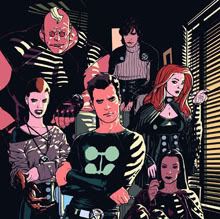
I have issues with the first statement because it perpetuates the comic book geek stereotype. The guy living in his parent’s basement, wondering how is Jean Grey’s sex life, incapable of talking to a real, three dimensional woman. I have issues with it because it objectifies the female characters even more than the superhero comics we’re discussing, and demeans the male readers. There’s a lot to be said about that, how suddenly reading superhero comic books is inherently childish, but I was going to talk about sexism, so I’ll stick to sexism.
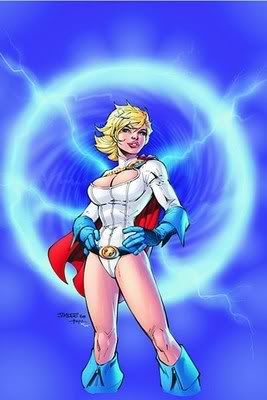
The second comment brought the attention of Karen Healey, the actual author of Girls Read Comics, and in her journal there came a discussion of how people can eat tacos without meat, which brings an interesting cultural difference. In Mexico, if it doesn’t has meat, it’s not a taco. So what the guys at Cenizas are saying is that if you haven’t got sexism on it, it’s not a superhero comic (I’m hoping they were limiting themselves to superhero comics, although the mention of the Sensational de Traileras, a pretty known soft porn comic book from Mexico makes me doubt it) and I have to disagree. Yes, Tits and Ass are required in soft porn and hard porn comic books. They’re porn comics for a reason. I don’t think anyone in the anti-sexism group wants the T&A to disappear from sex comics, because being anti-sexism is not being anti-sex. Yes, some T&A is expected to be found in comic book where half of your cast is dressed in spandex, but no one expects Power Girl’s breasts to disappear –in fact, many feminist blogs I’ve read love PG’s curves. But T&A is not the problem. The problem comes when the characters are treated like nothing more than furniture, shock value, and window dressing. The problem comes when female characters are raped, killed, maimed and torture just for torture sake (And, before anyone jumps, it’s the same thing when male characters get raped, killed, maimed and tortured. It’s just that usually? When a male character is tortured, it’s not just to spike sales with very few exceptions)
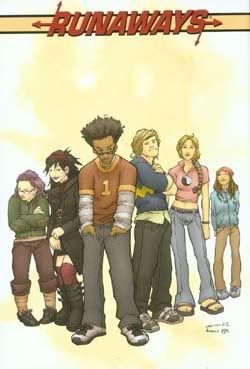
Actually, scratch that. Nothing needs to be sexist, not even porno comic books. Because having a woman prancing naked on a book doesn’t mean that the comic is sexist. It can be sexist, but it doesn’t need to be.
Because, well, let’s remember one thing:
Sexism: 1.- Attitudes or behavior based on traditional stereotypes of sexual roles.
2.- Discrimination or devaluation based on a person’s sex, as in restricted job opportunities; esp. such discrimination directed against women.
(Dictionary.com)
So, killing a woman character because a character had to be killed =/= sexism. Killing a woman character because it is a woman = sexism. Having a woman character fight crime in swimsuit and high heels = / = sexism. Having said female character do nothing except pose and being captured by the villians= sexism.
Hey, when all it’s said and done, Manga is more inherently sexist than superhero comic books. But then, Japan is a country culturally more sexist than the US or Mexico. Which brings us to cultural differences. Mexico and the US are very different countries, with different stories of feminism. Feminism there meant a very different thing and is a very different movement than what is here. They don’t have a Ciudad Juarez, for example. Yes, there’s sexism everywhere. But now it is illegal to fire someone based on their gender.
The old ‘there’s sexism everywhere, what are you going to do about it?’ excuse doesn’t work anymore. Yes, there’s sexism everywhere, and everywhere women and men are working together to stop it, to make it disappear, for true equality. Who says it can’t disappear from comic books?
And please, remember. Disappearing sexism doesn’t mean making the T&A disappear or adding even more shots of Nightwing, Green Lantern and Batman’s ass. It means treating all characters equally, which, in the end, will only lead to better stories and isn’t that what we all want in the end?
Friday, December 15, 2006
An amazing woman.
I can pinpoint exactly the moment when I started reading Strangers in Paradise, a couple of years ago when my best friend and partner in crime lend it to me after her boyfriend recommended it to her. The recommendation was great, not only because it wasn’t done in the usual ‘You should read SiP because it’s a woman’s book’, but because it was more of a ‘If you want to write real relationship stuff, you should read SiP’.
And while I completely understand the annoyance at having SiP recommended when one wants to read superheroes, I just can’t not recommend it when someone ask me about a book with strong women. Realistic women. And now that the series is almost ended (Only three numbers to go, and I can’t believe what a rollercoaster it has been), I want to talk about my current favorite female character. And no, I’m not talking about Katchoo, even when I love her to bits, or about Francine, who is every shade of amazing especially in the latest twist of the screw. No, I’m talking about the character whom I loathed when she was introduced and whom I wanted to see drown when she was getting married in Hawaii with Francine’s stupid ex-boyfriend Freddy.

Yes, I’m talking about Casey Bullocks.
The cheerleader. The annoying, always chirpy girl who suddenly attached herself to Katchoo and co. and just didn’t know when to let go. The one whose next appearance after the wedding was in a future flashback being all uncomfortable with the idea that maybe Francine and Katchoo were a couple. That Casey.
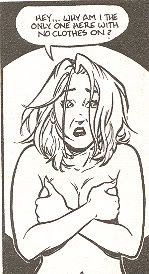 I have no idea when she became my favorite girl in SiP, but it was somewhere between her absolutely clueless attempt to seduce David after she realized Freddy would always be in love with Francine, and when she hugged Katchoo after Francine discovered they had been together one single, meaningless night. Somewhere in between, Casey went from becoming the cute but annoying sidekick who sometimes would come and make everything insane to be a woman I could respect. Sure, she did stupid things, but she did them because she thought they were the right thing to do. And in the meantime, she didn’t just became Katchoo’s friend, she became her rock.
She left the man who just married her for her body to become her own woman. She went to Vegas to be a showgirl because she could. And she went back to Katchoo and David, because she loved David, and she cares so much for Katchoo that she’ll be willing to do anything for her.
And then Terry Moore gave us a bit more background on Casey. She’s a recovering anorexic, she has had more boob jobs that one can remember, and a couple of nose jobs too. She’s dyslexic, and she had an incredibly low selfesteem that made her go and try to fix everything that wasn’t wrong with her by looking good and looking perky.
And she managed to come out of all it as one of the most balanced persons in Strangers in Paradise, becoming not only Katchoo’s rock, but David’s confident.
In issue 85 she has a heart to heart talk with Francine that even now makes me say wow. After many issues in which Casey practically locked Francine and Katchoo together in the same room, she tells Francine to stay away. Because Katchoo doesn’t need to be played with, because it has been enough of the ‘well, maybe this time it will work’ game. Because Casey will live with Katchoo, and they will raise together a child. A child that Katchoo is having with David, because Casey can’t have children for all the stupid things she did when she was younger.
Casey doesn’t do much in issue 86, and I’m truly worried about what will happen with the cast in issue 87. But whatever happens, I just have to tip my hat to Mr. Moore, who managed to turn my feelings about a character 180° degrees, and without me noticing that every time I was buying an issue it was not only to see what was happening with Katchoo, Francine and David, but because I was hoping that Casey would pop up again, filled with her love for life no matter what.
Sunday, May 28, 2006
Full Metal Women
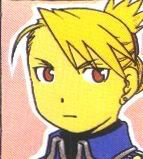
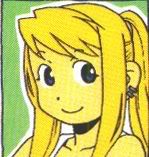
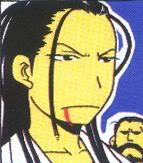
Because of work situations, last week I had to see all the 51 episodes of the Full Metal Alchemist anime, and read all that was available of the manga, which led me to three very important conclusions.
First: A 51 marathon chased with 59 manga episodes read in a week is not a good idea no matter what. By episode 12 I was ready to throw my DVD out of the window.
Second: They shouldn’t make anime based on manga that haven’t revealed at least the first half of their main plot. FMA, the anime, suffers from a lot of incoherencies because it is obvious that the animators were trying to add the stuff that was being shown in the manga, months after they had already given an answer to questions that their plot needed (The Gate, for example)
Third: Maybe I’m being a bit too feminist, but I think that the main difference between manga and anime is that the manga was written by a woman, while the anime staff is mainly male.
Let me elaborate.
One of my main problems with manga lately is that if one scratches the surface just a little, there are very few active females as main characters. The vast majority are very passive, even if the story moves around them. A quick glance to my personal collection shows a lot of girls who are dependant on their male friends, boyfriends and even enemies to solve their problems (Not all manga are like this, but it is a notorious trend, especially in shojo manga) .
FMA manga is different. It is a manga with a big male cast, a lot bigger than the female cast, but there isn’t a single female character that has more than two lines that is completely passive. In fact, I can only think of two passive girls –the kind that wait for things to happen to them, rather than make things happen- in the whole manga.
Yes, at first sight the girls do look alike in the manga and in the anime. In the anime, Riza is a woman in love and nothing more than the second in command of Roy –who does very few besides standing next to him. Winry tends to stick with the Elric brothers for no reason –besides her love for Ed; Maria Ross disapears after a few episodes; Martel is murdered while she hides, scared and trembling, inside Al; Lust stops being a villian because of the love she remembered for Scar’s brother; and Izumi Curtis, who is arguably the strongest woman in the manga, has maternal instincts attacks that make her act in amazingly stupid ways as soon as anime!Wrath appears (And here I could go on and on about how Japanese authors seem to think a mother should act, remembering what happened in Silent Hill: The movie, but I better let that subject lie)
In the manga, however, no woman is secondary to the man next to her. The best examples are Lust, who up to the moment of her death is an evil, manipulative bitch; Riza, who is not only Roy’s ‘right hand’, but is obviously his equal in all but range –it’s more obvious in the latter chapters that Roy does think of her as an equal and not as an inferior- and who can hold her own in a fight in closed quarters with Gluttony; Izumi, who is the only person without automail who manages to fight Greed hand to hand; and finally Ran Fan, a manga only character, who even cuts her own arm to fulfill her duty to her country.
And the villians. In the manga, the main villian is a man, who looks a lot like the Elric’s father, whose motives to create homonculi, control the country and create a new Philosopher’s Stone (because unless I’m mistaken, he has managed to create 7) are still a mistery. In the anime is Dante, a woman who is looking to create a new Philosopher’s Stone because she wants to keep her youth and beauty just as she has for the last 400 years and for that reason she kills people by the thousands and keeps the country at war. Oh, and she hates her ex because he left her for another woman. Could she be more stereotypical and lame? The old ‘I want to be forever beautiful’ was already old when the Queen gave Snow White a poisoned apple, and the variations haven’t been many.
I’m not saying that the members of the anime studio are misogynistic, or anything like that. I’m saying that it’s very funny the way that the characters- both male and female- change completely when a man writes them.
Let’s go back to Izumi, since she’s the most obvious case.
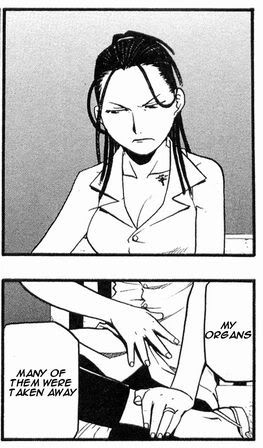
In the manga she explains to the Elric brothers that when she tried to create a baby, she ‘lost some of her insides’, but her hand in the general area of the stomach and her expression… they make hard to think that she’s not referring to her uterus. It’s her husband, Sig, who explains why she tried to transmute a human: She aborted, lossing the chance to have children forever, feeling guilty and “Saying sorry all night, even when it wasn’t her fault”. The idea that Izumi felt guilty because she didn’t fullfill her duty to her husband is clear- and even understandable since many women are educated with the idea that they have to ‘marry and have children for her husband’. Despite all, Izumi stays strong and she learned from her mistakes. She’s motherly with the Elric brothers, but she doesn’t forget the price of her mistake, and she keeps her use of alchemy to things that really matter (Not including, btw, the fight with Greed. She does that with her bare hands) And all this makes one of her most emotive scenes the moment when she thanks Ed for his discovery about human transmutation (I won’t explain exactly what it was to avoid more spoilers) Izumi here is a woman first, then an alchemist, then a mother.
In the anime, after seeing her vomit blood in front of her students and in one of the weirdest moments in the anime, a doctor tells us that she lost ‘many organs from her stomach to her intestine’, which causes the vomiting. The first question is, of course, How does she manage to survive without ‘many organs’? And the second is Why did she did it? Because her husband made her abort. And she felt guilty and tried to resuscitate the kid.
Well, We see the difference, right? Both in the extent of her sacrifice – she sacrifices more in the anime, but her manga loss is more symbolic- as well as the reasons why. In the anime her husband took the choice out of her hands ‘to save her life’, but she was ready to die to give her son a chance. The choice wasn’t made by her. And that added to her reaction to Wrath, the mystery boy that only exists in the anime and who is the result of her attempt to bring her son back. Izumi knows that Wrath is an homunculus, that he’s dangerous and that she must kill him. Despite that, she protects him, defending him from the army and almost letting him kill her because he is her ‘son’. And this was the same woman who pretended to leave two kids in a deserted island to teach them alchemy, and who greets them and trains them by flipping them in the air by fliking her wrists, who suddenly lets a kid almost choke her because he is ‘her sin’ and isn’t able to kill something that maybe sorta has her unborn son’s face –maybe sorta because when she saw him, it was a fetus. An aborted fetus. Wrath doesn’t look like her at all. He looks like Envy’s younger brother. So Izumi in the anime is mother first, then alchemist… and then we remember she’s a woman because if she wasn’t, she couldn’t be a mother.
The saddest part of all this is that FMA was, in its manga version, a very good show with strong female characters who weren’t stereotypes, a rare thing in a shonen manga, but in the anime… for time, plot necessity, or just ignorance, they became stereotypes.
Oh, and to end this without misunderstandings. I am sure that the differences in characters were because the anime was written by guys. But I’m not saying a man can’t write well a female character. Just that he will write her differently from what a woman will write the same character (And of course, the thing also works the other way. A woman will write a male character differently from a male writer)
Saturday, May 06, 2006
Everyone has a favorite.
I was going to blog about my latest convention experience, but reading around the forums (mostly in English) about Civil War #1 made me change my mind.
I still haven’t bought my copy of CW, and I was not going to buy it, until I found out that the team that was going to ignite the whole thing were the New Warriors.
Confession time? I’m a big, big fan of the New Warriors, and am still trying to get the whole original run.
But I’m not a fan of the Warriors for Night Trasher (Who I always saw as the stereotypical angry street hero), or Nova, or Firestar (Who will always be in my mind as part of Spiderman’s Amazing Friends, sorry), or Marvel Boy or any of the others.
I became a fan because of Speedball, who was my favorite since his original series.
Now, if you guys read my last blog, you will see I apparently have the touch of death to my favorite characters (Other favorites? Doug Ramsey, dead. I loved Jason Todd since he was the Robin I knew from the Mexican editions, so I was devastated when I found out he died for fan voting. Ted Kord, dead. Sun Boy, who is not dead but has the awful tendency to end up exiled or de-powered. Rictor, depowered. Maddrox, who thankfully is alive but spend some time dead. Magick, dead. Synch, dead. Skin, dead. Chamber, depowered. Jubilee, depowered. Linda Danvers, erased from continuity. Hawk and Dove ver.2, one became a villain, killed the other and then was killed by Hal Jordan. Joy), but to be fair, I’m used to it. I love the less popular characters, and less popular characters tend to die easier than the big ones. (I’m still holding my breath for Chase, from Runaways, but he seems to be popular enough to survive)
The thing is, in superhero stories at least, you can’t win. No matter how obscure, useless, an annoying a character seems, someone, somewhere, loves that character. I’ll admit I was surprised at seeing in forums that I wasn’t the only Speedball fan, since he seemed to be universally disliked. But there was even someone saying that Microbe was his favorite character.
When Blue Beetle died, and the fans came out of the woodwork, there were accusations that we were only liking him because he had died. That if he *hadn’t* died, we wouldn’t care. I never argued with the guys making those accusations because, frankly? Nothing I said about my love for the character would make them change their mind over that.
The same thing happened over the outcry for Sue Dibny’s death (When they were not busy denying that it had been an atrocious show of misogyny and bad writing).
And with Kon’s death.
To be perfectly frank here, I have been guilty of that. When they killed Superman, I couldn’t care less. Hawkseye? Meh. Jean Grey? What? You think I believe for a second she’ll stay dead this time? Jade? Who was that?
But that doesn’t change that someone, out there, loves them and was profoundly hit by their deaths.
With the rumor of a death in Runaways, the fans seem divided. I’ve seen people posting in outrage that they better not dare to lay a finger on Molly, on Gert –and by extension, Old Lace-, on Katarina even if she hasn’t been around for a while, or on Nico. There’s a vocal number of fans for Chase too, but even those seem convinced that Chase is going to die. Everyone is sure that Victor is not going to die since he has to be in the future.
I would hate that Chase died, sure. And I’m rooting for Nico to bite the dust. But I’m pretty sure someone wants exactly the opposite.
And since it’s superhero comics… we know that they can come back. There have been weird cases of people staying dead after dying, sure. Gwen Stacy comes to mind. Moira McTaggert seems to be underground too. My list of favorites has that tendency. But in ten, twenty years? They could come back. Hell, I’ll be honest. If I got a job writing for Marvel? I have ten possible ways to bring the Warriors back already. Same for Kon. Ted is a bit harder, but give me a couple of free hours and I can think of a way. And I’m pretty sure that I’m not the only one. We can moan and whine about how much we hate the revolving doors in superhero heaven, but we don’t want to see our favorites dead.
And everyone is someone’s favorite.
Manga, and independent comics don’t have that problem. Since the story is lineal and have an end, when a character dies is because he or she has filled a role in the story and his/her death is a fitting end. There are exceptions, of course, but in general if someone dies is because it’s needed for the story. And so, those who held the character dear to their hearts can be content in the knowledge that the characters died for the right reason.
The possibility of resurrection takes that away. Because what good is anyone’s sacrifice, if next year there will be another big event and they’ll come back, or their deaths will be written away in five years time?
I like my sacrifices to have meaning. I like my comics to have impact. But I think we need to find something besides ‘death’ and ‘rape’ since it’s obvious that rape is almost never treated like something more than a cheap plot devise, and death has become a joke among readers.
Wednesday, April 05, 2006
Kon-El, Superboy. 1993-2006.
Or Why I am going to stop reading DC comics for a while.
I’m sorry about the spoiler title, but there’s no other way. For those who follow DC Comics religiously is not a spoiler. For those who don’t… well, I don’t think you will care.
During one of the most stupid annual events I’ve ever read since I started reading comics, Superboy, aka. Kon-el, aka. Conner Kent, dies in a fight against Superboy Prime and Alex Luthor, who wish to destroy the universe as we know it to recreate the multiverse.*
And while one could say that Superboy’s death was heroic, and that he managed to engrave himself in his friend’s memories (Especially in Wonder Girl’s memory), and one could say that he’s a less popular character, that it was better for him to die than to have him as plot device for Luthor’s ‘stock secret plan 53’…
I can’t agree with that.
When Superman died, in his big fight versus Doomsday, I didn’t read DC comics. I found them boring. And despite the great hype around Death of Superman, I didn’t believe he was staying dead for long. I bought Superman 75 out of curiosity, but that was all my interest.
By the time we got to “Reign of the Supermen” I had leafed through the stories, but hadn’t bought any. Until I read Superboy’s first appearance.
I’ll be truthfull. It wasn’t the greatness of the script what called my attention (“Don’t call me Superboy!”). It was that Superboy was *cute*.
But I was 16. So I had an excuse.
And Superboy caught me, even when I still think that Superman is a bore. I bought all the Adventures of Superman with Superboy in, I also got the tpb of Death of Superman, Funeral for a Friend, Return of Superman, and Reign of the Supermen.
Superboy #1 was the second first issue I bought new in my life.
I followed Superboy faitfully during almost all his series, through the times when he wouldn’t grow up, when he got the name Kon-El, and even when he was sent to the Kent’s farm, something that always seemed stupid to me, but I trusted DC back then.
Young Justice was one of my favorite comics thanks to Peter David’s scripts, but I started reading it because Superboy was on it.
When YJ was cancelled, I thought about giving Teen Titans a chance, but they didn’t manage to grab my attention, so for the first time since he appeared, I didn’t bought a comic book with Superboy on it (But I loved him in Legion of Superheroes)
And while I waited for Teen Titans to stop being boring to buy it, I was thrilled to see another of my old favorites back, Booster Gold, thanks to the wonderful “Formerly Known as the Justice League”. Which, by the way, is a wonderful comic comic book. Both FKATJL as it’s sequel, I Can’t Believe it’s not the Justice League are a must buy.
And then in Identity Crisis they killed one of the best supporting characters of the League, Sue Dibny, Ralph Dibny’s wife.
There has been a lot written about the fact, so I won’t fill a post with it. But I was sickened. Not enough to stop buying the Legion, and anything that had to do with the League that I liked, but I was angry.
A year later, in Prelude to the Crisis, Ted Kord, the second Blue Beetle, was killed along the character of Maxwell Lord (The latter was killed both in character, as what he did was completely out of character for him, and literally, a couple of issues after he killed Beetle). But I still kept buying the Legion because to me it was fun (And I know this is not an opinion shared by many)
Superboy’s death, however, is the last drop for me. Because it was innecessary and stupid, because it seems that someone is following a manual on ‘how to write DC crisis’, because ‘Superboy Prime’ is one of the worst villains ever…
And because when we finally get to the final battle, the climatic moment, the fatal wound… it actually happens off panel. We see Kon and SBP destroy Alex Luthor’s machine, yes. We see how Wonder Girl puts away the debris to find him impaled with an iron rod.
What? How did that happen? Following his original powers, he has a permanent TT field around him, unless he’s distracted or unconscious. Since he is awake when Cassie found him, it wasn’t the latter and… Who would get distracted during a fight against SBP?
And if we follow his ‘Superman-lite’ powers that lately had been appearing, things get worse. Because... well... Superboy should be invulnerable, right?
Citing Annie Wilkes, it’s not that he’s dead. It’s that his death was unfair. (Same could go for Speedball in Marvel’s Civil War. If he dies, well, I can take it even when he’s other of my favorites. But if he’s going to die, I hope that he’s killed with his powers taken in account and not with a dues ex machine, please)
So finally, this is a so long to DC comics. Not a boycott, because I don’t expect anyone to do the same, and it’s not forever because… well, it’s comic books. Kon-El is going to come back sooner or later (And if one sees Teen Titans 34 it may be sooner than expected) and when he does, I’ll start buying DC again.
But as comic book readers, the only way we have of telling the editorials that we don’t like something, is by not buying their titles.
*It’s a bit complicated to explain to those who don’t read comics. So let’s just say it was one of those fights to save the world as we know it and leave it as that.
Sunday, April 02, 2006
Battle Royale (manga) vol. 15
(I said I was going to talk about comics, right?)
Those who know me in person tend to believe that my personal taste in manga and anime is mostly shojo-based. I can’t blame them because there was a time in which all I read was shojo, with a few romantic shonen manga in between, like Oh My Goddess!, Video Girl Ai and similar stuff. The truth is that I’m also a fan of gore and ultra-violence so… you can imagine my personal collection is weird.
I found Battle Royale, like practically everyone, for the hype the movie got. Before I could see the movie, however, I had the chance to go to the San Diego Comicon for the first time, where casually TokyoPop had an offer of buy 5 and take 6. Long story short, never give me a credit card. Among the stuff I bought were the first six volumes of BR.
Fastforwarding in time, we arrive to this Wednesday, when I finally bought volume 15, because, yes, the story caught me. So much that now I have the movie, and the novel. So you can imagine how much I love the story (Spoilers follow the cut, btw…)

Battle Royale’s premise is more or less easy to explain. In an alternative Japan under a totalitarian government, among the multiple ways they have to keep the people under thumb there is ‘The Program’, where they take high school groups chosen at random, take them to secure and isolated locations and… basically they tell them that they have two choices: Kill their classmates, or let their classmates kill them. There can be only one survivor, so, get on with the killing.
Even without reading the novel, or seeing the movie, there isn’t a lot of mystery over who will be the final survivor because even when Masayuki Taguchi (Writer of the manga and author of the novel) does give each student at least a chapter for themselves, it’s obvious that he focuses in Shuuya Nanahara as the one who won’t kill and will try to save some of his friends, and on Kazuo Kiriyama, aka. the Terminator because the guy, without any emotion (literally) does kill more or less a third part of the class without help.
After 14 volumes, we finally get to the final confrontation between Kiriyama and Shuuya (Who is accompanied by Noriko and Kawada). Since volume 12 more or less, BR had gotten ‘slow’ dedicating entire chapters to nothing happening and this volume is the worst offender. In the first page, Shuuya has Kiriyama, point blank.
In page 80, he finally pulls the trigger.
Now, yes, I do like the way in which manga can use decompressed storytelling and use six or seven pages for a minute of ‘real time’, but this was too much.
Kiriyama killed many of Shuuya’s friends without mercy, including his two best friends outside Nobu, and by this time in the story, tried to kill Shuuya three times, tried to off Noriko twice and spent more or less all volume 14 in a high speed chase trying to get Shuuya and his group.
Shuuya, however, stops to think about it for 80 pages.
80 pages of Shuuya thinking about all the students who were murdered by Kiriyama (Some who weren’t killed by Kiriyama, but, well, when one is in a roll…), and Nuriko, and the love everyone felt for her (Although I’m willing to say that the last part was a translator change because I seriously doubt Sho, for instance, had any interest in Nuriko since he was gay) before he pulls the trigger. And it’s not a case of ‘lets see how much can we decompress 10 seconds for 80 pages’ because even the other characters tell him to stop thinking about it and that he has to shoot.
Now, don’t get me wrong. I love Battle Royale, the manga. I loved it particularly up until volume 8 where my second favorite character bites it, and I can ignore the needless and excessive fan service. But reading Shuuya feeling bad because Kiriyama is dead was a bit too much for my taste.
Why? Well, because even if as readers we know why Kiriyama acted like he did, Shuuya doesn’t know. Shuuya was defending himself and Nuriko from a dangerous psychopath who had killed at least ten people to Shuuya’s knowledge. Maybe even more. A pshycopath who even half dead had been still trying to shoot him. So Shuuya stops and performs CPR on him?
Yes. Shuuya is presented as an eternal idealist who will not shoot even if a gun is put to his head. In the movie, the final battle is Kawada versus Kiriyama. In the novel I’m not sure, but I think Nuriko is the one who shoots. The point is that Shuuya doesn’t kill. The fact that in the manga he does, the fact that he is the one who will defend Nuriko, it is an important point for the character... but the point gets messy when he tries to save Kiriyama. Yes, Shuuya has principles, and he didn’t want to participate in the game, and he was forced to, and I have no problems with him crying after Kiriyama is dead, because it’s Shuuya. He’s not crying for Kiriyama, but for the loss of potential that the game created. I have problems with him trying to save Kiriyama because in perspective it looks silly. As a reader, we know up until the last minute that if Kiriyama reacts, he will kill Shuuya, Nuriko, and if he manages, Kawada too.
By page 100, the rhythm goes back to normal, and Kawada’s plan climax doesn’t feel cut short or rushed. In fact, even if it would have helped to have a couple extra pages, it is perfect. Of all the different versions of the same, it’s the one with the more full epilogue, and I won’t lie, the way in which our heroes get to New York made me tear eyed because it gave a fitting ending to my second favorite (Yes, the one who dies in volume 8)
In general, my great beef against BR is not present in this particular volume. I mean the fanservice. I understand that mangas marketed to the male readers must put girls showing skin, with big breasts and short skirts, not to mention the panty shots, but BR went a little to far. Mitsuko got naked at the briefest excuse, and volume 10 is almost pornographic. But when the only girl left it’s virginal Noriko, well, we weren’t going to see her naked. At times the art looks grotesque, but that’s something that has been happening since volume 1, and it fits the story.
To sum up, Battle Royale is over, and it was a truly interesting trip. I highly recommend it to everyone who is an Orwell fan, doesn’t has problems with extreme violence and can stand realistic drawn intestines. On the outside of the body.
However, if you’re a woman... naked girls are the dish of the day, and women die as violently as men. If someone wants to sell the idea that manga is ‘friendlier’ toward women than American comics… Battle Royale is not the manga to do it.
Tuesday, March 28, 2006
Back on Blogger space
After thinking a lot about this (And in one of those ego trips that sometimes one can get), I remembered that I had a Blogger profile and account.
When I started looking into the blog movement, I opened this account and posted about... five times. Or something. And LJ seduced me with its icons, and communities, and everything they have there for a fan and well, you see. I left, leaving this account emtpy, empty.
Why did I came back to blogger? Well, because LJ is wonderful in a lot of ways, and I'm not denying that, ut even if my fan experience there has had no problems and I have even managed to stop my usual net-shyness about talking to people I don't know in person... Well, LJ is my place for some fandoms that are almost exclusive for LJ. And they're ok there, separated from what is my absolute passion and my job (I'm lucky to have a job I love)
Sure, there are a million blogs on the net, and many of those are about comics. I don't think I'll bring something really new or totally different to the table, but who knows. Maybe I will. If I don't try it, I'll never know.
I ramble a lot, and sometimes I act really militant, but that comes with the territory (The militant thing. Feminist Mom, Hippie Dad, what can you expect from that combination? The rambling comes from who knows where), so I warn ahead that I can talk about something I found in the mexican comic book industry (That does exist. It's not remotely like the one you can find in other countries, but it's here), or about the last comic I bought and left me in awe, or about a manga, or a mexican fanzine. I won't talk about my cats, or the hamsters, my neighbour's parrot or something like that. That's why I have an LJ for.
I love comments, opinions and feedback. So if you want to say something, feel free. After a couple of curious experiences, I can't say I won't censor anything because I don't know what will happen in the future. But I don't plan to censor anything. I'd love if everyone could sign with a name, even if you are not in Blogger, but that's not a requirement.
And now, in theory, we can start the show.
When I started looking into the blog movement, I opened this account and posted about... five times. Or something. And LJ seduced me with its icons, and communities, and everything they have there for a fan and well, you see. I left, leaving this account emtpy, empty.
Why did I came back to blogger? Well, because LJ is wonderful in a lot of ways, and I'm not denying that, ut even if my fan experience there has had no problems and I have even managed to stop my usual net-shyness about talking to people I don't know in person... Well, LJ is my place for some fandoms that are almost exclusive for LJ. And they're ok there, separated from what is my absolute passion and my job (I'm lucky to have a job I love)
Sure, there are a million blogs on the net, and many of those are about comics. I don't think I'll bring something really new or totally different to the table, but who knows. Maybe I will. If I don't try it, I'll never know.
I ramble a lot, and sometimes I act really militant, but that comes with the territory (The militant thing. Feminist Mom, Hippie Dad, what can you expect from that combination? The rambling comes from who knows where), so I warn ahead that I can talk about something I found in the mexican comic book industry (That does exist. It's not remotely like the one you can find in other countries, but it's here), or about the last comic I bought and left me in awe, or about a manga, or a mexican fanzine. I won't talk about my cats, or the hamsters, my neighbour's parrot or something like that. That's why I have an LJ for.
I love comments, opinions and feedback. So if you want to say something, feel free. After a couple of curious experiences, I can't say I won't censor anything because I don't know what will happen in the future. But I don't plan to censor anything. I'd love if everyone could sign with a name, even if you are not in Blogger, but that's not a requirement.
And now, in theory, we can start the show.
Oh, yeah. In case you're interested. Following the example of my friend Paco (Blackpaco on the link list) I decided to try and do a Mirror in spanish. Why? Because it's my native tongue, and every single time I start a blog, I end up writting in English because all my fandom friends speak english. So I did the mirror thing to keep that one 100% in Spanish (Bocho Pega Duro, Bocho Pega Más in case you're curious)
Subscribe to:
Posts (Atom)
